What is an agentic web? Definition, how it works, and what it means for your site

10 minutes
.
September 16, 2026
AI is changing the speed at which a marketing team can move, and the website is where that speed either compounds or breaks. Teams are launching campaigns, pages, and variants at a pace unheard of two years ago. Yet, speed without a system creates its own set of problems, such as inconsistent branding and changes that no one can link to a specific result.
The website is at the heart of this shift. It used to just receive campaign traffic. Now, it is becoming the execution layer where a team responds to changing demand, adapts the experience for every audience, and learns which improvements drive growth. The challenge lies in making these activities function as a single system rather than a series of disconnected projects and tools. Moving fast only becomes an advantage when you have the governance and workflows to handle the increased volume.
This guide defines the agentic web, distinguishes it from chatbots and marketing automation, details the capabilities and layers of an agentic site, its benefits for a business, the guardrails it requires, and how our agentic Webflow agency approaches it.
The agentic web refers to a web where AI agents read sites to respond to users and act directly on them to build, optimize, and update them, based on the company's design system, CMS, and data. A standard AI assistant responds to a prompt and produces a result. An agent makes a series of successive decisions toward a defined goal, uses tools, verifies part of its work, and requests validation when a task exceeds its scope.
A concrete example: A team gives an agent their design system, brand guidelines, positioning, and access to their CMS. The agent assembles a landing page for each campaign segment using existing components, saves them as drafts, and waits for approval before publishing. The team sets the strategy and the guardrails, without having to move every task between five different tools or manually review every metric.
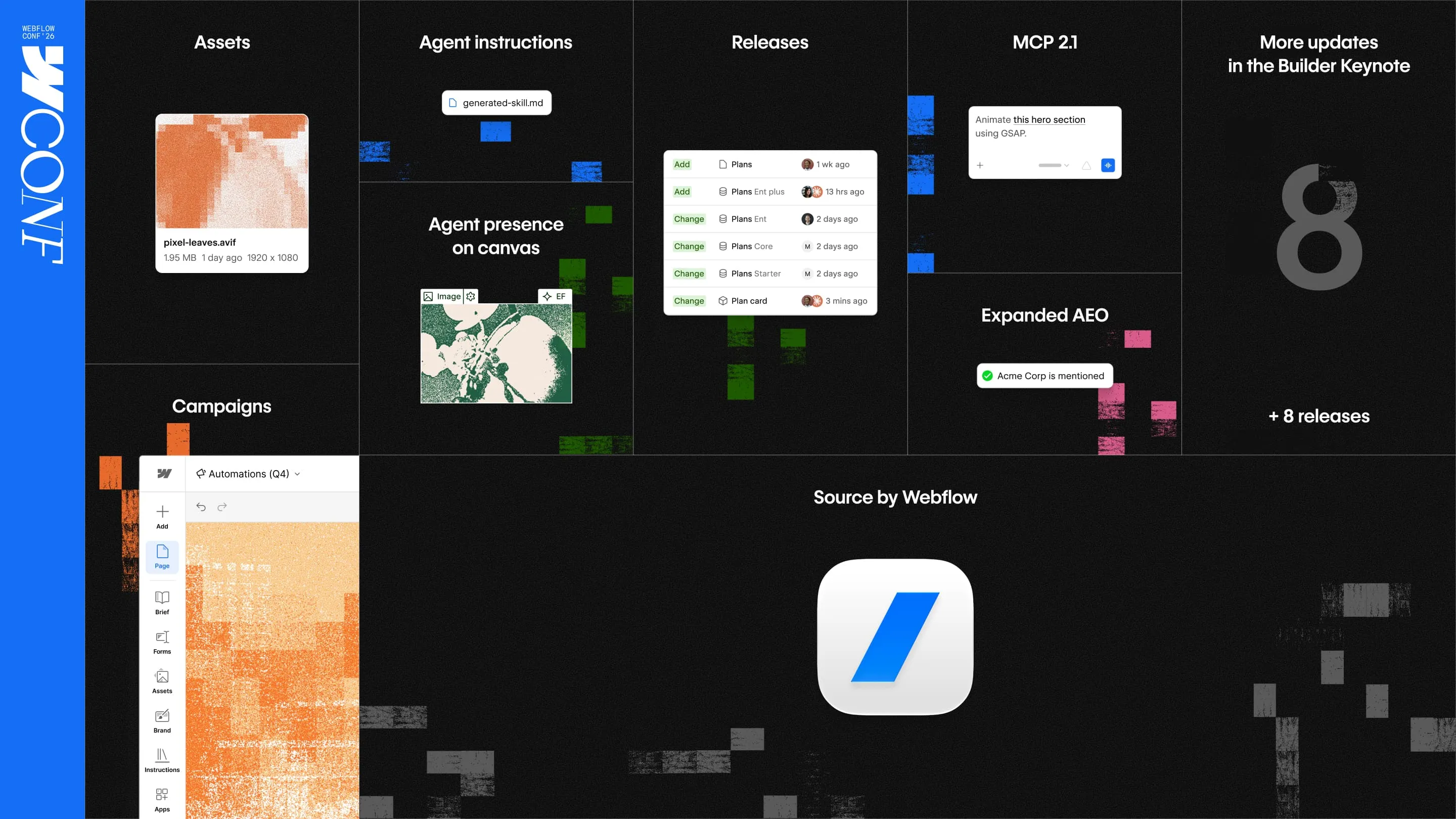
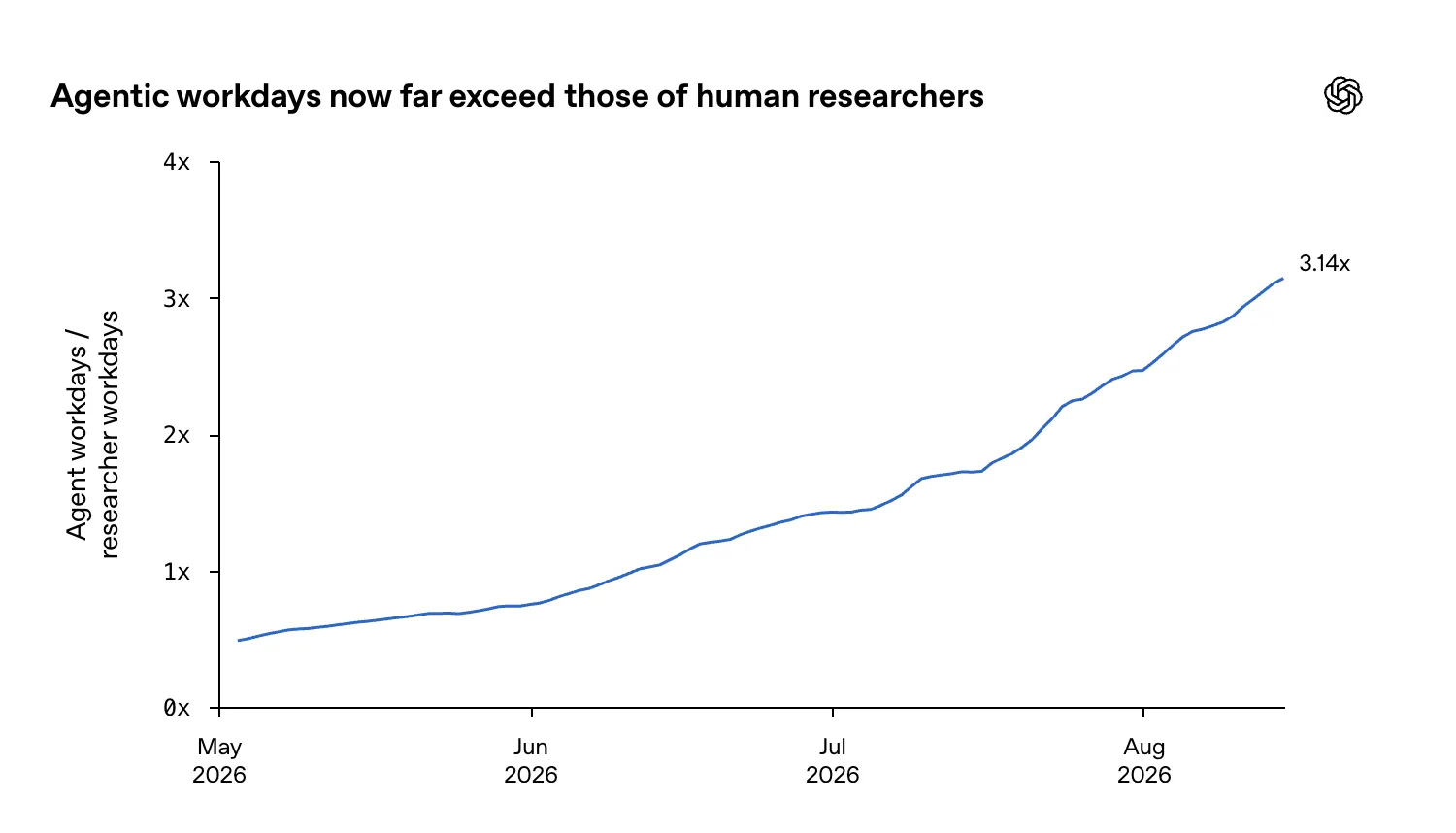
This definition aligns with the category Webflow has named agentic web marketing platform and brought to life with Source at Webflow Conf 2026. It goes beyond the scope of a simple editor. The MCP (Model Context Protocol) now provides Claude, ChatGPT, or Cursor with a standard connection to a CMS, CRM, or Search Console and OpenAI reports that as of mid-August, its research teams were consuming 3.1 agent workdays for every human workday. Websites are among the first software environments where this way of working is taking hold, because they centralize content, branding, and a portion of customer acquisition.
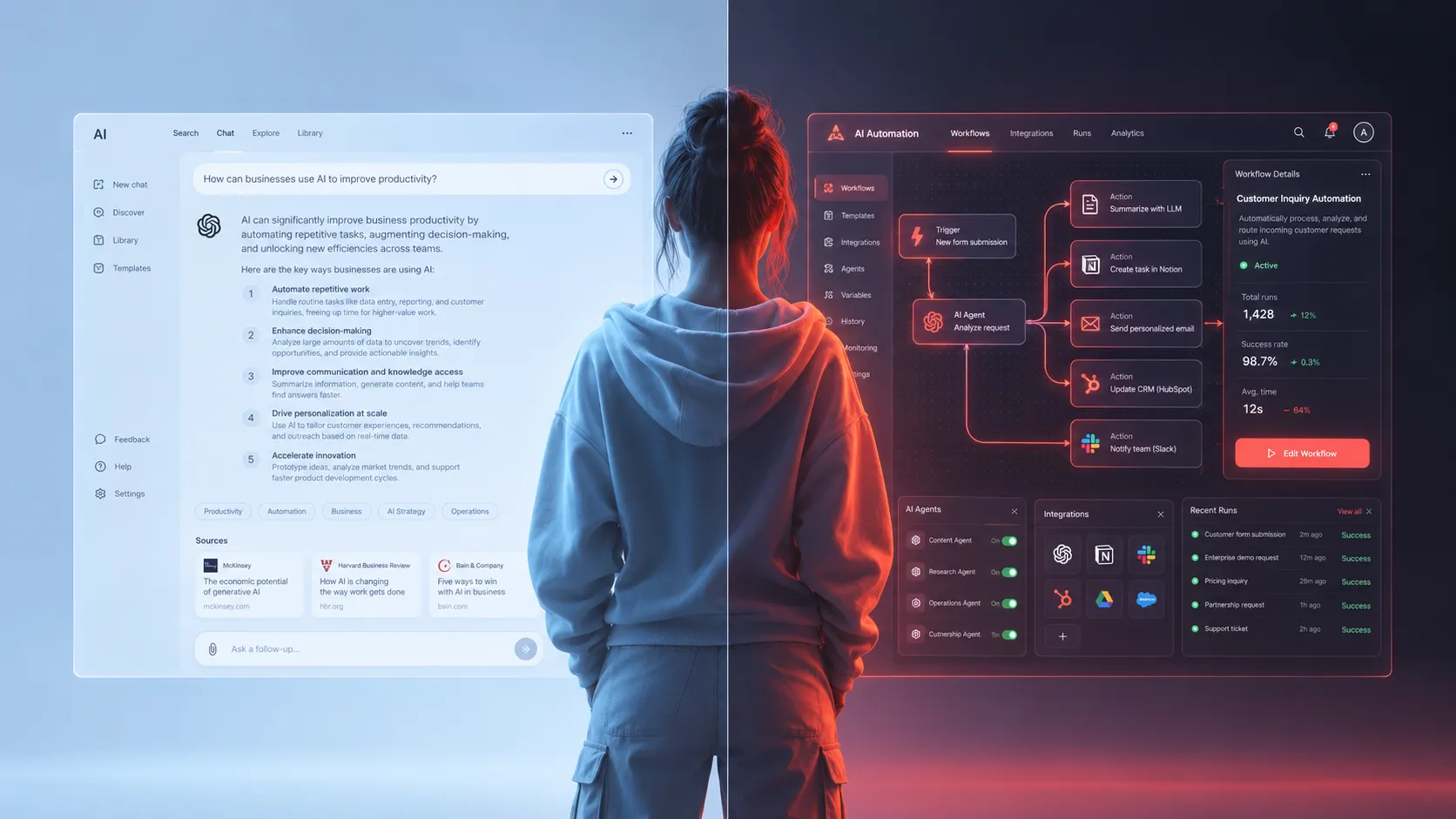
An agentic website uses company and visitor data to modify a live site under supervision. An AI chatbot responds to visitors without changing anything on the site. Marketing automation acts on campaigns, emails, and advertising using the same data, without affecting the actual page experience. While all three approaches share data, they do not share the same target.
An agent can write a page or suggest a new headline. To improve a site, it also needs access to the CMS, publishing controls, performance data, and brand guidelines. Without this context, the agent fills the void with a plausible suggestion but cannot carry the improvement through to a measurable result. This requirement for context is what separates an agentic web from a simple AI feature added to a site.
An agentic website is not defined by an isolated AI feature. It must manage an entire improvement cycle, from identifying a gap to measuring the impact of a change. Most teams already have tools that cover each step separately: one for detection, one for writing, one for publishing, and one for measurement. Information gets lost between these tools, and the original context along with it. An agentic website connects these steps into a system that the team oversees. It is composed of five capabilities.
An agentic site stack brings together systems and agents that understand a brand's online presence, improve its website, and link those changes to results. Each layer solves a specific problem. The value of the whole comes from the shared context between the layers. When they are disconnected, a signal identified by one agent loses its meaning as it moves from one tool to another.
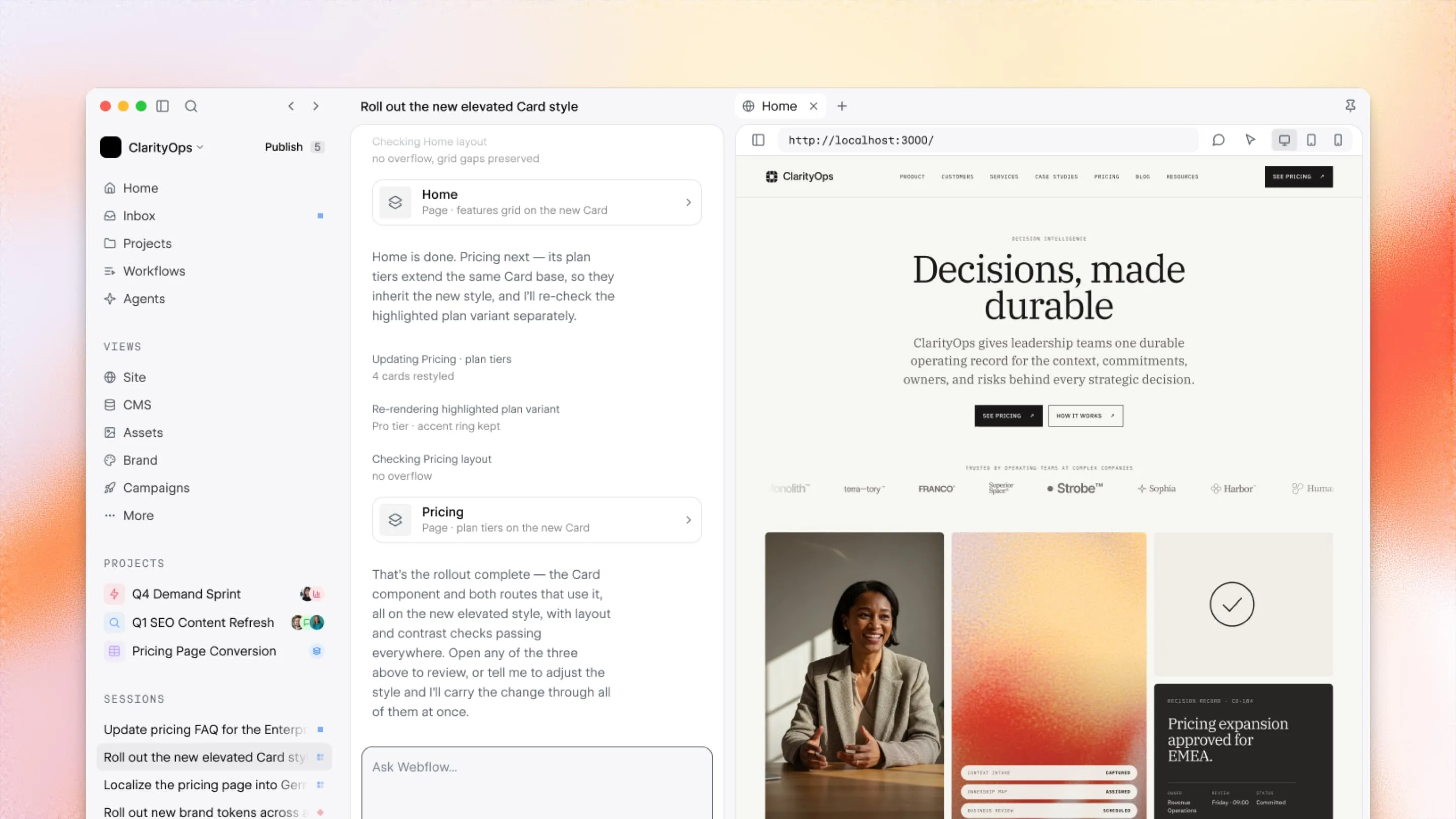
This layer shows how the brand appears in responses from ChatGPT, Gemini, Perplexity, or Google's AI Overviews. It indicates whether the company is mentioned, which pages are cited, whether the information used is accurate, and which competitors appear for the same queries. It distinguishes between a general visibility issue and a specific content gap. A search engine might cite a competitor's page because it answers a buyer's question more directly or relies on a more credible external source. The goal is to strengthen your presence in the responses that influence purchasing decisions, rather than trying to appear everywhere. Our SEO and AEO offering has been working on this layer for two years, and Webflow AEO is now integrated into the platform.
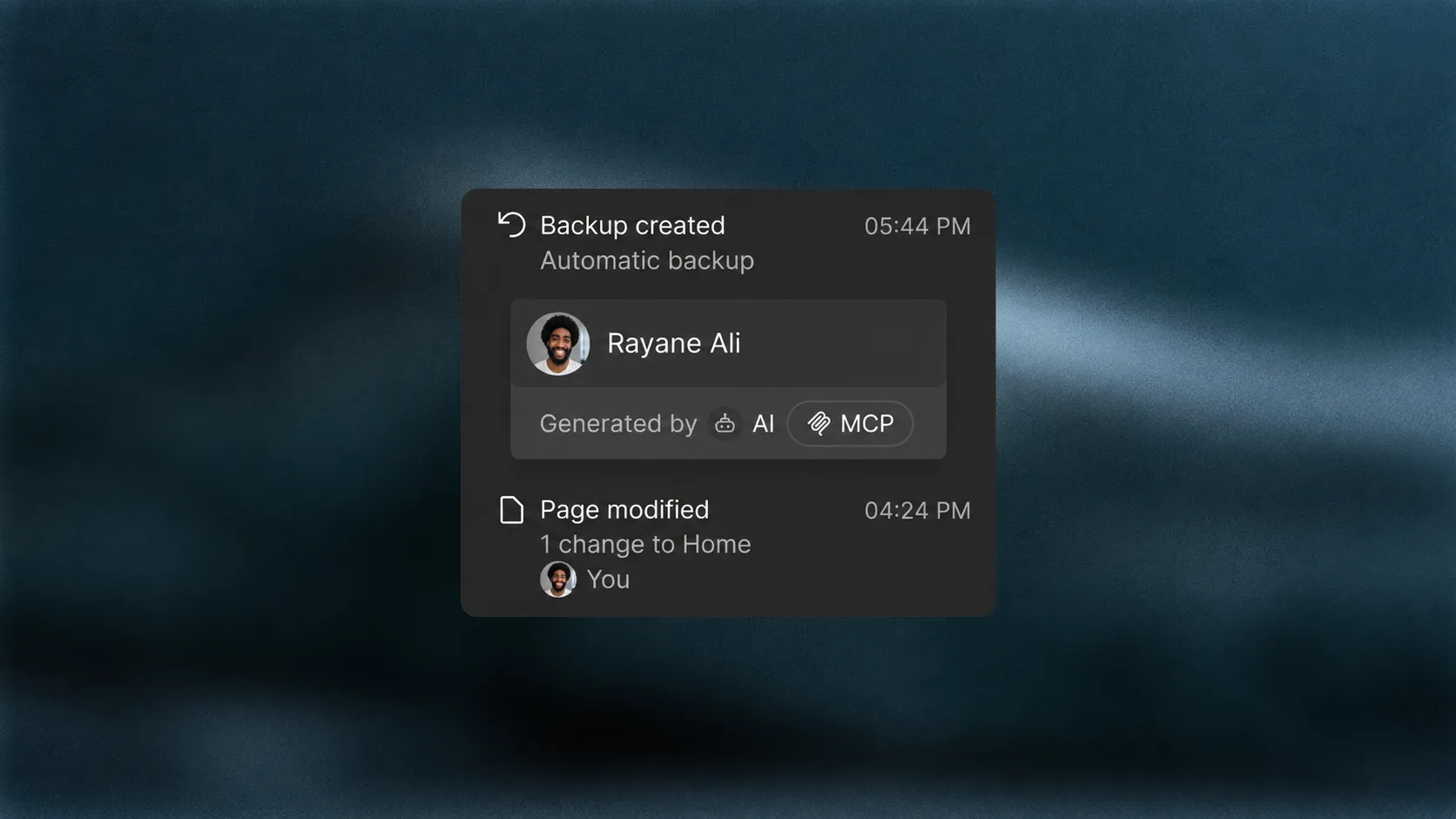
This layer brings together the tools that modify the site, along with the permissions and approval workflows that govern these changes. Structured content is easier for answer engines to find and simpler to replicate across pages. Shared components maintain design consistency across pages, and agents generate content within these components rather than alongside them. The Webflow MCP server now allows an agent to manage CMS collections, create pages, and save each item as a draft for review, adhering to the roles already defined on the site.
An agent is only as good as the outlets it is plugged into. The CRM provides the objections heard by sales teams and the origin of opportunities. Analytics and Search Console provide visitor behavior and the queries that lead them to the site. MCP standardizes these connections and eliminates the need for custom scripts, provided that a single source of truth is maintained for each data point: the CMS for content, the CRM for contacts, and analytics for behavior.
This layer adapts the site based on what is known about a visitor's intent. It delivers tailored messaging for someone arriving from a specific campaign, and provides evidence and testimonials customized to their industry. Personalization remains selective, because changing every part of the experience makes results unreadable for AI engines and increases maintenance. A/B tests then compare versions, basing the next decision on metrics rather than intuition.
The final layer connects the people and steps involved in a launch. It handles task assignment, content review workflows, and tracks dependencies that delay publication. Bottlenecks occur between tasks, such as a design-ready page waiting weeks for legal approval. This layer also determines the level of autonomy granted to each agent, as a corrected alt text and a modified homepage do not follow the same approval path.
A site becomes revenue infrastructure when it plays an active and measurable role in closing a customer. It helps a buyer find the brand, understand its value, and take action. An agentic site connects what brought a visitor to the site with what they do once they arrive, then applies those insights to future updates. Four effects can be observed.
An agentic site keeps analytics and results connected, carrying context from one stage to the next. The feedback loop shortens, and decisions are based on fresher metrics. The benefits are seen on four levels.
An agentic site does not replace marketers or take away their decision-making power. It reduces the repetitive tasks that consume human time and frees it up for higher-impact opportunities.
An agent that writes a recommendation carries little risk. An agent that modifies a CMS carries more, and an agent connected to the CRM, code, and production directly impacts the brand. We experienced this on our own site. An agent rewrote a meta description in English on a French page and deleted a schema it deemed redundant. Without review, the error would have appeared three weeks later in Search Console.
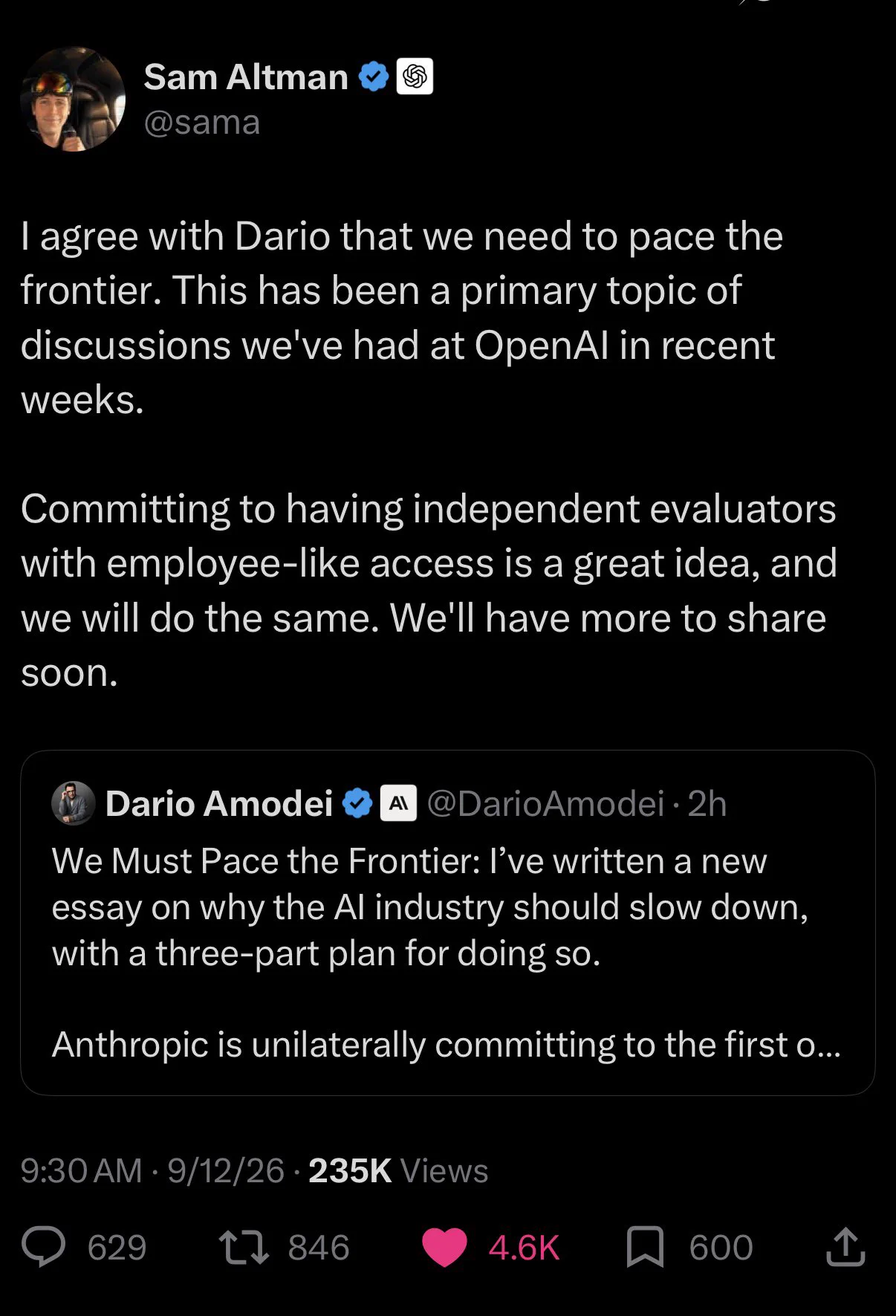
Guardrails are built into the site itself. A design system with encoded, constrained component placement prevents generic page layouts. Context files, such as Webflow's Agent Instructions, convey the brand's tone, mandatory disclosures, and rules. A branch isolates work before it goes live, a history log records every action and its author, and human validation is calibrated based on the level of risk. Webflow clarifies in their Source FAQ that agent actions follow the same roles, permissions, and review workflows as human work. The more an agent can do, the more the framework in which it operates determines the quality of the result. This reasoning extends to the models themselves, a point Dario Amodei, CEO of Anthropic, made on September 12 in "We Must Pace the Frontier", a call for common standards and independent evaluators that was endorsed the same day by Sam Altman and Demis Hassabis.
Several questions remain open. The pricing for agentic platforms is not yet known. The cost of continuously active agents, in terms of both tokens and supervision time, has yet to be measured on real-world projects. There is no clear contractual answer regarding liability for errors published by an agent. A site that rebuilds itself entirely without supervision is purely speculative, and there is no indication that any company actually wants that.
We believe a web platform should do more than just create and publish pages. It should provide insight into how humans and AI systems discover a brand, and then allow the site to evolve without waiting for the next redesign. A site's true value is created after it goes live, at the point when, in the traditional model, no one is working on it anymore. This conviction is the foundation of our agentic web strategy.
We put it to the test on our own site before offering it to others. Claude and the Webflow MCP have been running on Noqode for over a year to audit collections, rewrite metadata, and enrich articles, with every change arriving as a draft for approval. Our workflows, built with Claude Skills , transmit project context, the design system, and our SEO and AEO standards to AI tools right from the design phase. Our growth team, starting at €1,500 per month, manages this loop over the long term using SEO, AEO, CRO, and content based on observed data.
One question now precedes the choice of an agentic web platform. What would you let an agent change on your site tonight, and who would approve it tomorrow morning? The answer defines the architecture you need. Our AEO audit begins by having LLMs read your site, and our agentic web strategy extends that into workflows and guardrails. Book a call with our team →