Who is in charge of maintaining a website? Solutions & Tips

4 minutes
.
January 10, 2025

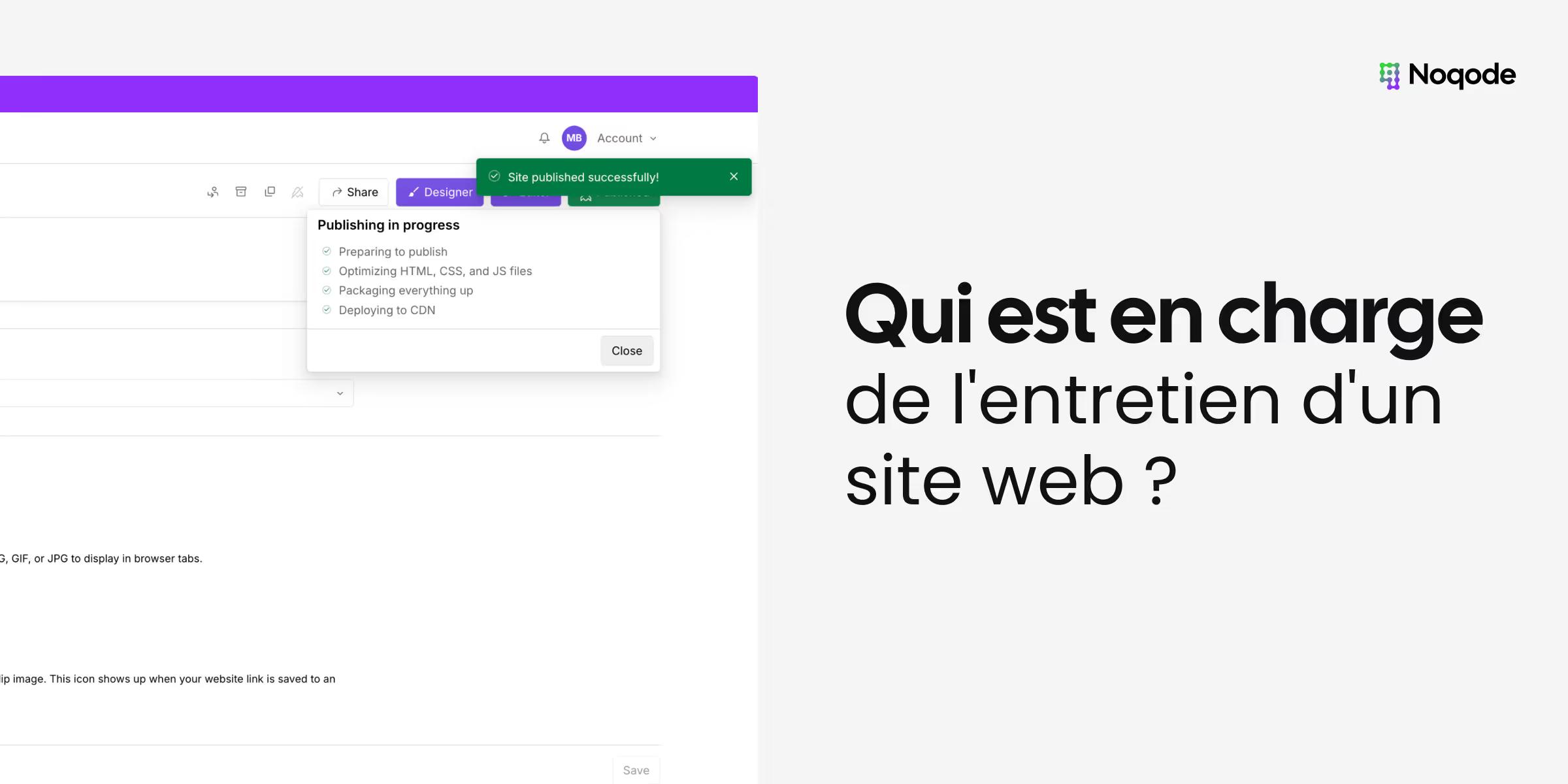
The upkeep and maintenance of a website are essential tasks to ensure its proper functioning, security and a smooth user experience. However, not all solutions require the same level of maintenance.
Unlike other CMS like WordPress, Webflow distinguishes itself by offering a plugin-free environment, thus eliminating the need for frequent technical updates. With Webflow, marketing teams can edit the site in real time via an intuitive editor mode. Our specialized Webflow agency offers tailor-made training courses to guarantee the autonomy of your teams, which reduces maintenance costs.
In this article, we will look in detail at who is responsible for maintaining a website and why a solution like Webflow can offer you better autonomy.
A webmaster is often responsible for maintaining and updating the website. Their mission is to ensure that the site remains up to date and operational. Among their tasks:
However, with Webflow, the role of the webmaster is simplified because the system does not rely on plugins requiring constant updates. This frees up time to focus on other strategic aspects of the site. If you want to learn more about this topic, check out our article Webflow review 2024: Complete analysis on the CMS for creating a website

In some cases, a web developer can intervene to manage complex technical problems or add new features. The developer is often called for:
That said, Webflow significantly reduces the need for technical interventions. The maintenance of the website is lightweight because the platform is based on a secure infrastructure, with no plugins to update. Furthermore, site updates are directly managed by Webflow in the background, without you having to worry about them.
To learn more about the comparison between Webflow and WordPress, visit our article: Webflow vs WordPress: What is the best CMS for your website?

An unmaintained site becomes vulnerable to hacking attacks or malicious software. Regular maintenance includes frequent backups to protect your data. With Webflow, security is integrated natively, thus reducing the risk of attacks linked to outdated plugins. This guarantees a reliable site without additional intervention on your part.
A regular update is essential to maintain the interest of visitors. This includes:
With Webflow, your marketing teams can easily manage content via editor mode in real time. This allows for quick changes without relying on external developers. This autonomy of marketing teams not only optimizes the workflow but also reduces costs in the long run. Do you want to find out how to maximize this independence? Check out our article: How to create a blog on Webflow: Optimize your content easily.
Unlike CMS like WordPress, which require frequent updates of plugins and themes, Webflow offers an all-in-one solution. Here's why it simplifies management:
With Webflow, each site is designed to remain efficient without extra effort. If you are curious about the cost of a site with Webflow, explore our detailed article: Webflow rate in 2024: What is the price for a Webflow site?
One of the great strengths of Webflow lies in the possibility for your marketing and communication teams to edit the content of the site without having to call on a developer. Noqode offers personalized training to teach you how to use editor mode and manage the CMS independently. This allows:

Although website maintenance is crucial to ensure its performance and security, Webflow stands out by eliminating the complexity of updates and technical management. By opting for Webflow, you benefit from a secure and efficient solution without having to manage plugins or recurring technical problems. In addition, the support of our agency and our training courses guarantee you a total autonomy in the management of your site.
A webmaster, a web developer or a web agency can handle the maintenance of the site. However, with Webflow, you can do without complex tasks and manage the content yourself.
No, Webflow does not rely on plugins, which considerably reduces the need for technical maintenance. All the updates are automatic and managed in the background.
With editor mode, teams can update content in real time without going through a developer. This allows a cost reduction and greater reactivity.
The webmaster is mainly responsible for content management and site monitoring, while the web developer intervenes to solve technical problems or add complex features.
An insecure site is exposed to hacking attacks and bugs. Webflow offers a secure infrastructure that reduces these risks.